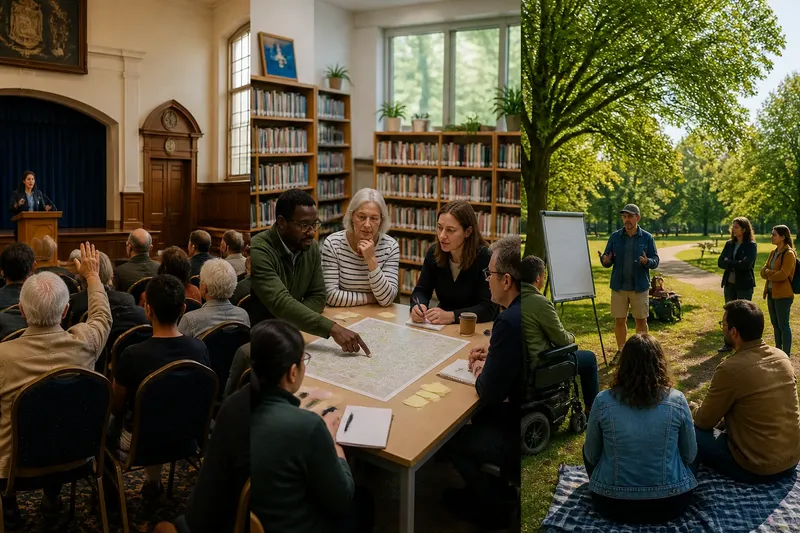
A First Visit to a Neighbourhood Meeting
A first visit to a neighbourhood meeting is easier with a simple plan: learn its purpose, listen without pressure and decide whether to speak.
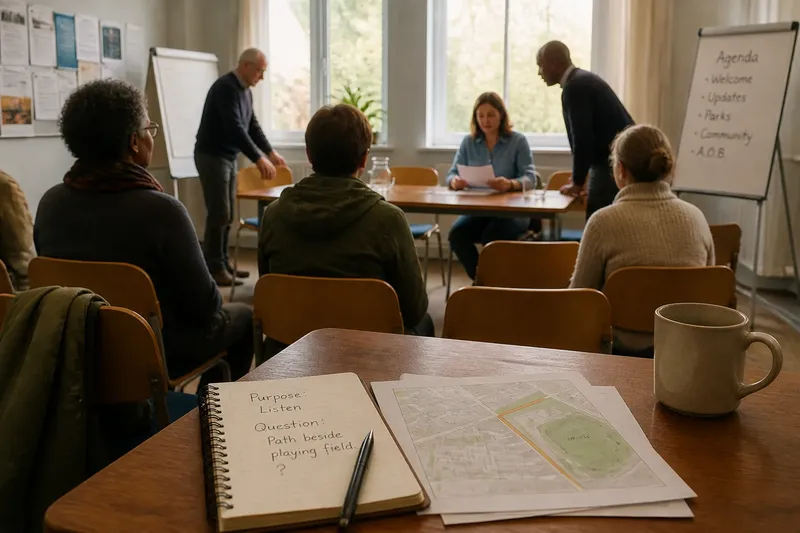
You find the meeting room by following a hand-written arrow from the library entrance. Inside, people are arranging chairs while someone checks a paper agenda. If you are making a first visit to a neighbourhood meeting, you do not need to arrive with a speech ready. A little preparation can help you understand what the gathering can do, listen for a while and choose whether to take part aloud.
The right approach depends on why you are going. You might have a specific concern, want to learn what is happening locally, or be curious but unsure whether this is your kind of room. Treat those as different situations, not as tests of how confident or committed you are.
Start by matching your reason to the meeting’s purpose
Neighbourhood meetings can bring together residents, local groups and people responsible for public services, but their remit varies. Some share updates; others discuss proposals, set priorities or organise activities. A meeting may welcome public comment without being able to make a decision that evening.
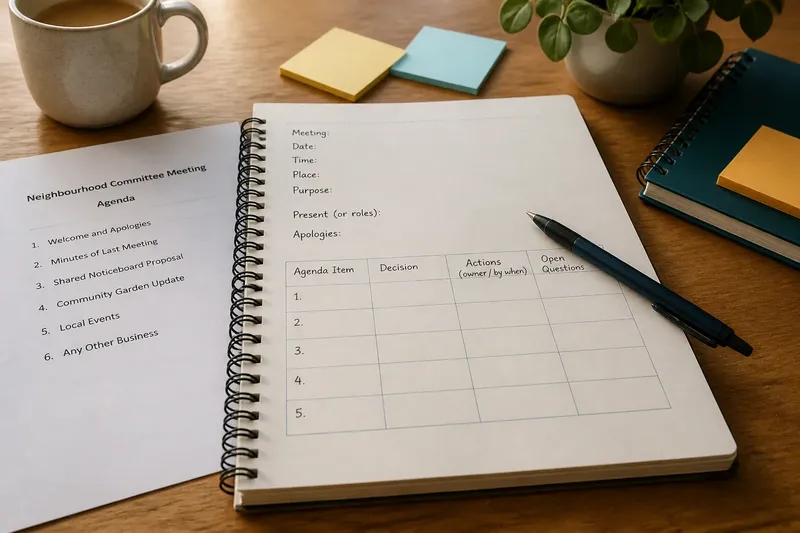
Look at the invitation, agenda or organiser’s description for clues. Check who convenes it, what area it covers and whether it is open to visitors. If there is no written information, contact the organiser with a straightforward question: “I’m new to the meeting. Is it mainly for updates, discussion or decisions?” Knowing the purpose helps you judge what to listen for.
If you have a specific concern: Go if the agenda touches it, or ask the organiser whether it belongs with this group. Bring a concise description of the issue and the location, rather than expecting the meeting to solve a problem outside its remit.
If you want to understand local activity: Attend without a speaking goal. An update meeting may be useful even if it is not a place to propose changes.
If you are unsure whether you belong: Ask whether newcomers can observe. If the answer is yes, you can treat the visit as a chance to learn the room’s purpose before deciding about future involvement.
Choose a meeting for the question you actually have, not for the promise of a quick answer.
Prepare lightly when you want to listen first
A first visit does not require a folder of documents. Read the agenda if it is available, note the item that interests you and bring a notebook or a phone for private notes. Write down unfamiliar names or terms to ask about later. You can also check the meeting’s format: whether visitors sign in, whether there is a public-comment period and whether papers are handed out in the room.
Plan your arrival in a way that leaves you room to settle. If the venue has several entrances or rooms, check the address and access details in advance. You may want to sit near an exit if that makes it easier to leave when you need to. You are not obliged to stay until the final item.
Imagine you are concerned about a dim stretch of path beside a local playing field. The agenda includes a general item about parks, but the notice does not say whether the group can request maintenance. You could write down the path’s location, listen to who handles park issues and ask the organiser afterwards where a report should go. The useful result is a clearer next contact, even if no decision is made in the meeting.
Keep preparation small: one purpose, one question, and a way to record what you learn.
Use the room to learn how decisions happen
Once the meeting starts, follow its sequence before interpreting its tone. Notice who chairs, how people take turns and whether an item is for information, discussion or a decision. These signals help you distinguish a lively exchange from a formal vote, and a suggestion from an agreed action.
Listen for practical details: which organisation is responsible, what has already been tried, what remains unresolved and who will follow up. If a paper or map is mentioned, ask whether visitors may see it. A term that sounds familiar may have a specific local meaning, so note it rather than assuming.
People may refer to earlier conversations that you missed. That does not mean you must catch up on every detail before you can follow along. Listen for the current question and ask for context if it affects your understanding. A useful prompt is, “Could someone briefly explain how this item reached the meeting?”
Also notice the meeting’s limits. A neighbourhood group might collect residents’ views but have no authority over a council service. A chair may record a concern without being able to promise a response. Recognising that boundary helps you decide whether to ask the room, contact an organisation directly or simply keep listening.
Write down what was decided separately from what was suggested. That small distinction makes your notes more useful later.
Choose whether to speak based on what the room needs
Speaking is one way to participate, not the admission price. You can attend, listen and leave without explaining yourself. If you do want to contribute, aim to make your point easy for others to understand and respond to.
Before speaking, consider whether your point fits the item, whether someone has already answered it and whether the meeting has invited comments. If the chair is managing a queue, follow that process. If you are uncertain, ask the chair quietly during a pause whether there is space for a brief question.
A simple contribution can include three parts: the place or issue, what you have observed, and the question you want answered. Avoid presenting a guess about someone’s motives as a fact. If you are speaking on behalf of other people, be clear about whether they asked you to do so or whether you are describing your own view.
If speaking feels uncomfortable, alternatives may suit you better. You could send a short written question to the organiser, talk with someone after the meeting or attend again after learning the format. If you do speak and the discussion moves on, that does not necessarily mean the point was dismissed; check what was recorded or who is meant to follow up.
Take the option that matches your purpose and comfort, rather than trying to make a first visit count as much as possible.
What should you expect at a first visit?
Do I need to introduce myself?
Follow the chair’s invitation and the room’s usual practice. If nobody asks visitors to introduce themselves, you can listen without making a formal announcement.
Can I attend without speaking?
Often, yes, but the organiser can confirm whether observation is welcome. You can participate by paying attention and deciding what, if anything, you want to do next.
What if I do not understand the agenda?
Ask the organiser for a plain-language explanation before or after the meeting, or request context when the relevant item comes up. You do not have to understand every abbreviation to follow one discussion.
What if the meeting is not the right place for my concern?
Ask who handles that issue and how to contact them. A meeting can still help you identify the responsible group, even when it cannot take the matter forward itself.
Afterwards, decide what would make a second visit useful
Give yourself a few minutes after the meeting to note what you learned. Record the group’s purpose, the names of any organisations to contact and any follow-up that was clearly agreed. Keep your own observations separate from commitments made by the group, and do not assume that a conversation in the room replaces an official report or request.
Then choose a next move that fits your reason for attending. You might contact the named organisation, send one question to the organiser, return for an item on a future agenda or decide that this is not the right forum. If you plan to follow up, be specific about what information you need and whom you are asking.
A first visit to a neighbourhood meeting is useful when it gives you a clearer sense of the room, its limits and your own options. You can leave with no new commitment, or with a small, practical next step. Either way, arriving to listen first is a complete way to begin.