The Noticeboard Is Not the Whole Conversation
A public notice works better when it gives people a clear next step and a way to reply, so information can become a genuine invitation to take part.
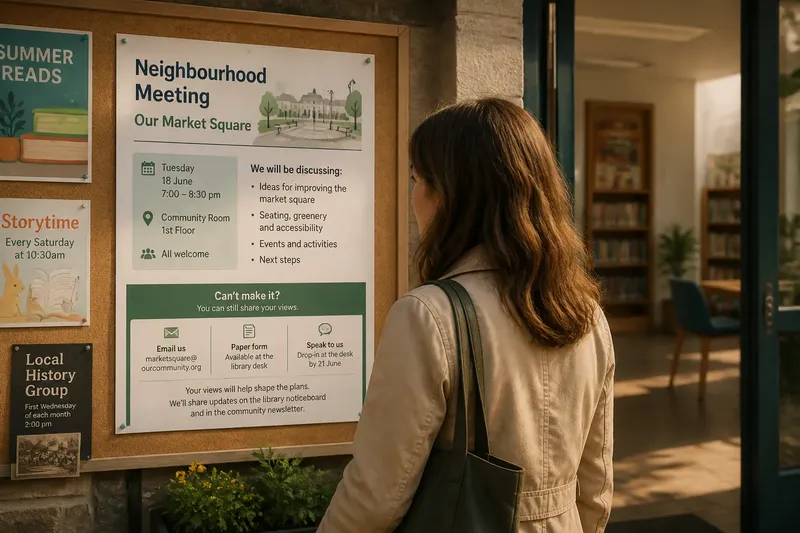
A paper notice beside the library entrance says the market square will be discussed at a neighbourhood meeting. It gives a date, a room and a list of agenda items. But a passer-by who cannot attend may still have no idea how to contribute. A public noticeboard can share information; participation begins when the invitation also shows what a person can do next and how their response will reach someone.
That distinction matters in public language. A notice is not simply a container for facts. Its wording sets the terms of the encounter: who is being addressed, what kind of response is welcome and whether there is more than one way to give it. The best format depends on the decision at hand and on the people who need to be able to answer.
Choose the response the decision can use
Before drafting a notice, identify what is still open. Is the group asking residents to share local knowledge, comment on a proposal, volunteer for a task or choose between options? These are different invitations. “Have your say” is vague if readers cannot tell what is being decided or what sort of contribution would help.
Write the action in plain language. “Tell us which crossing feels difficult to use, and where it is” gives a reader a manageable prompt. “Discuss transport issues” asks them to work out the topic, scope and useful level of detail for themselves.
Also say what happens after a response arrives. A reply may inform a draft, be passed to a working group or be collected for a later discussion. Do not imply that every suggestion will be adopted. Explain the role contributions can play, so the invitation is honest about its limits.
A notice with a direct reply route suits a focused question
A notice can invite written responses through a named email address, a paper form at a staffed desk or a clearly identified reply box. This approach suits a bounded question that people can answer without a long discussion: for instance, which of two proposed times works better, or which entrance to a public building needs clearer signs.
Make the reply route easy to spot. Put it beside the question, not in a separate line of small print. Say what information to include and whether a name is needed. If a person can reply anonymously, say so; if a follow-up is needed, explain what contact details are for.
A direct route also needs an owner. Name the role or group that will receive replies, and give a sensible date for responses if there is a closing point. If the notice gives no indication that anyone will read what arrives, the invitation can feel like a collection box with no destination.
Say you are asking people who use a community hall which evening is easiest for a drop-in session. A notice could offer a short form at the reception desk and a postal address, then state that the booking team will use replies to choose a suitable evening. Someone who passes the hall can respond without attending a meeting, and the team can see the practical purpose of each answer.
A conversation session suits questions that need context
Some matters are harder to answer in a short written reply. A proposal to change how a shared room is booked, for example, may affect groups in different ways. A facilitated conversation gives people a chance to explain the circumstances behind their views and hear what others need.
The notice should tell readers what the session is for, who will guide it and what participants can expect to do. “Come and discuss the draft booking rules” is more useful than “Community consultation”. If there are particular questions on the table, name them. If the meeting is for listening rather than deciding, make that distinction clear.
This format suits people who can attend and are comfortable speaking in a group, but it should not be treated as the only route. Some people work evenings, need interpretation, prefer to write, or do not want to speak in public. Offer a way to contribute before or after the session where that is practical, and explain how those responses will be considered alongside the conversation.
Do not promise that one meeting represents everyone. A lively room can still leave out people who could not attend or did not feel able to speak. The notice can invite a range of participants without implying that those present speak for the whole neighbourhood.
A response window suits people who need time or another route
When a topic is complex, or when attendance is difficult, a notice can invite contributions over a set period through several accessible routes. These might include a short written prompt at a local service desk, a reply by email, or a conversation with a named contact. Each option should reach the same responsible person or group.
Keep the routes manageable. A long menu can make the task less clear, especially if each option has different questions or deadlines. Use one shared prompt and describe the available ways to answer. If people can respond in a language other than English or ask for a different format, state how to request that support.
A response window suits a decision that benefits from considered input and can remain open long enough for people to notice the invitation. It is less suitable for an urgent operational message or a question that must be settled immediately. In those cases, state the constraint and direct readers to the decision-maker for information about what is still changeable.
How do you choose a useful invitation?
What should the notice say is open for input?
Name the question, proposal or task that can still be influenced. If the decision has already been made, do not invite comments as though it remains undecided; explain what information or response is still useful instead.
Should people reply in writing or meet in person?
Use writing for a focused prompt that can be answered briefly, and a conversation when people need to explain context or hear different perspectives. If both kinds of contribution matter, offer a clear route for each and say how they will be brought together.
Who will receive and use the responses?
Name a team, role or contact rather than leaving readers to guess. Tell them what the recipient will do with contributions, such as using them to revise a draft or prepare a recommendation.
How will people know what happened next?
State where an update will appear or how it will be shared. A noticeboard may be one suitable place, but a named contact or community newsletter can also help close the loop for people who responded through other routes.
Make the next action visible on the notice
Use a simple drafting check before posting:
- Purpose: Does the notice explain what is being discussed or decided?
- Open question: Can readers tell what is still open to influence?
- Action: Is there a specific request, rather than a general appeal to participate?
- Reply route: Is it clear where and how to respond?
- Access: Does the notice offer a workable option for people who cannot attend or do not want to speak publicly?
- Use: Does it explain who will receive contributions and what they can inform?
- Follow-up: Is there a stated place or route for an update?
If one item is missing, revise the wording or choose a more suitable format before posting. A short notice can still do this well. The aim is not to fit every detail on one sheet, but to let a reader see the next action and find the information needed to take it.
For a notice about a neighbourhood proposal, that might mean a brief description, one precise question, a meeting date, an email or paper reply route, and a sentence about when the group will share what it heard. The main phrase is simple: a public noticeboard creates an opening for participation only when the invitation makes a response possible and shows where it can lead.
Before putting the notice up, read it as someone passing through would: can they understand the issue, decide whether they have something to add, and identify the next step without asking a stranger to interpret it? If not, the conversation still needs one more line.